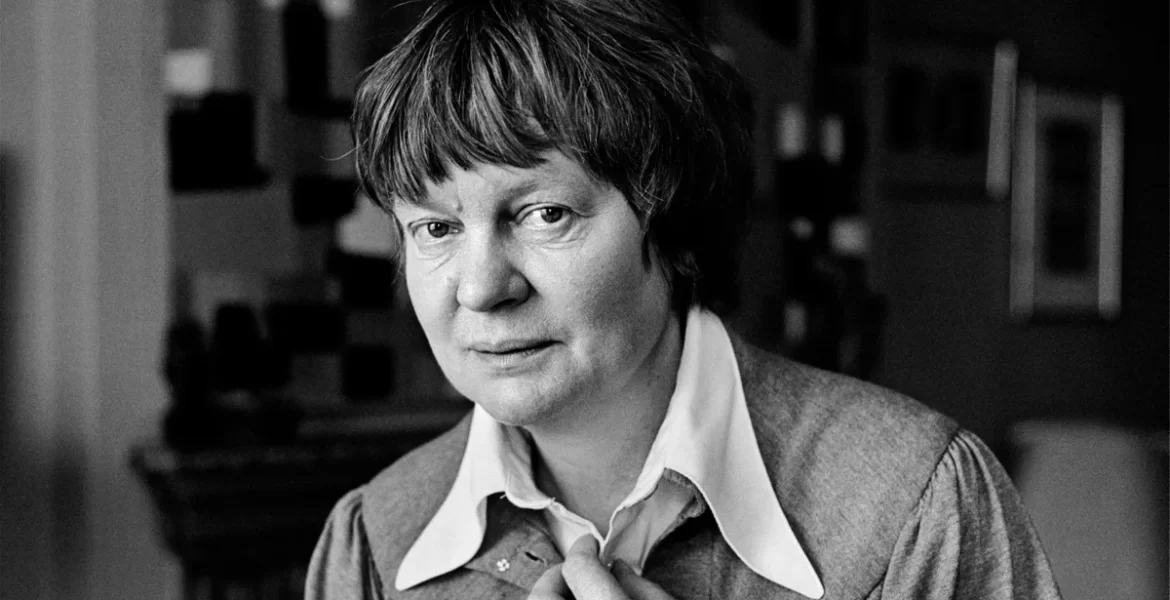
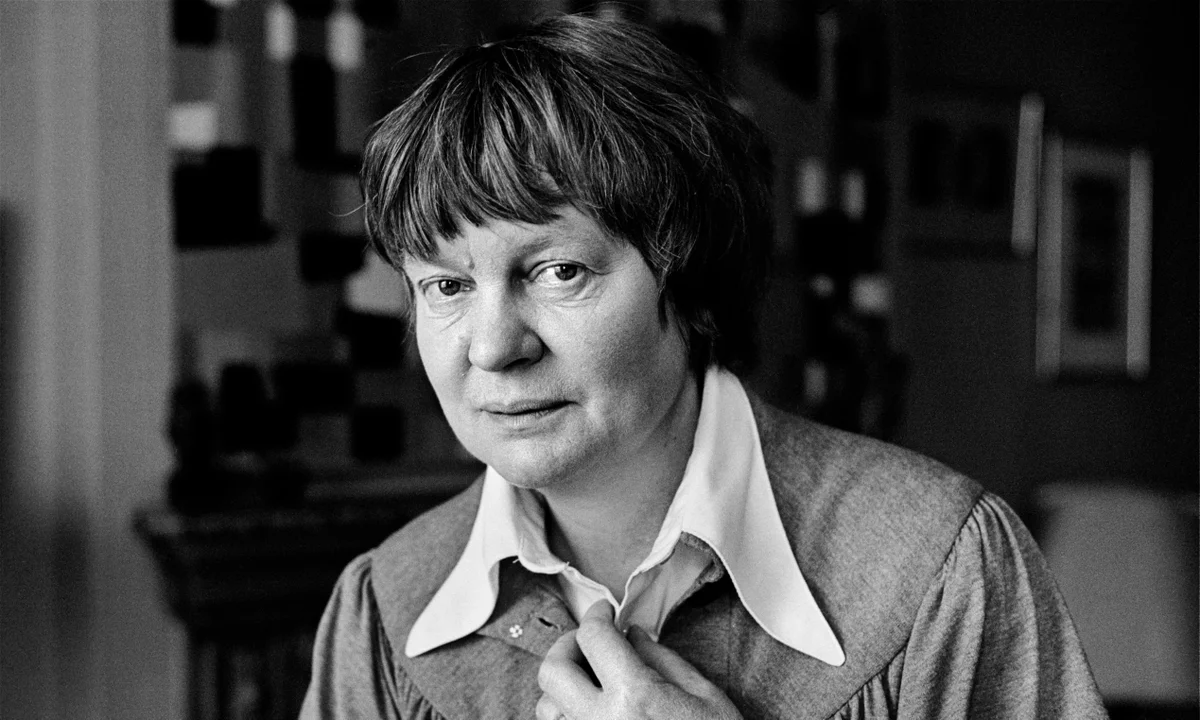
Iris Murdoch was a highly successful novelist. She and her husband lived in North Oxford. She and I saw quite another ‘between books’, as they say.
There was a time in China when I injured my foot and was quite lame for a day or two. Iris had dipped into her little store and given me a twopenny bar of Cadbury’s chocolate for consolation or cure.
Back in Oxford, there was an occasion when I was acting as a guide for a group of East Europeans visiting the city, and Magdalen College in particular. Iris Murdoch was invited.
The group and I were gathered in a comfortable rear common room when Iris entered, unescorted. She stood by the door, puzzled and lost. Word had got about that she was suffering from the first symptoms of dementia.
I hastened over to her side. She had no idea who I was.
I said, “Iris, you once gave me a twopenny bar of Cadbury’s chocolate…”
Her face lit. ”Oh, Brian! Yes, of course!” She gave a sob. “China! Wasn’t that wonderful?”
Dear Iris! She died in 1999. Her husband was John Bayley, who wrote of her illness. She died greatly respected as a major British novelist.
Iris had had a long same-sex affair with Phillipa Foot, an Oxford-trained philosopher. Iris won a Booker prize for her novel The Sea, the Sea. Some of us remember her first novel, The Bell, and the shock and pleasure of it. Very soon after Iris’s death, a film was made about her life, with Kate Winslet very touchingly playing Iris. [As she was later to play the illiterate woman in The Reader.]
Here’s an example of authorial friendship: one writer speaking well of another writer’s book.
A slender card was inserted by Victor Gollancz into their edition of my novel, Forgotten Life. On one side of this card, Iris Murdoch speaks.
“A long handsome ingenious novel,” she says “about war and peace, very funny, very sad, full of closely seen, closely thought detail, wise, exotic and entertaining.”
At first I thought she must have got hold of the wrong book.
But you notice that she may speak for my books; I am not invited to speak for Iris’s. and therein lies a difference we must respect.
Well, we were quite friendly after having met at a friend’s dinner party. Also friendly was Dame Iris’s academic husband, John Bayley. I had been reading Iris since her early book, Under the Net appeared.
The Murdochs had been living in Summertown, a prosperous stretch of semi-academic Oxford. They moved out to a distant Oxon village, where my wife and I would occasionally drive to dine with them.
The dear lady seemed to be eccentric in small ways, moving the salt cellar about, hiding it by the fruit bowl.
This amused me. Later, I found it less amusing; Iris had contracted Alzheimer’s disease.
In 2001, the film Iris appeared, with Judy Dench as the afflicted writer. Bayley wrote about his wife before she had died.
Could I have been a better friend to Iris? I was not invited to be, and felt that she lived in a closed universe, as some do; but, after all, such matters do not entirely depend on invitation.
On one occasion, I was having a waterfall installed in my garden. We discussed – did we? – why it is less difficult to make water fall than to rise; and this may account for why it is more – shall we say royalist? – to display fountains in preference to waterfalls.