This is an account of two men, both writers, who rose to eminence at about the same time. Their destinies proved very different, in the main because of a fundamental difference of character.
It seems that Hamlet was right in saying ‘There is a destiny that shapes our ends, rough-hew them how we will’.
John Osborne and I saw little enough of each other, but we were always amiable. He wanted to get someone to film my novel, The Hand-Reared Boy, in which his wife, Jill Bennett, would play the school matron. The film never happened, but it was fun while it didn’t last.
Osborne was established for a writing career with the performance in 1956 of his first play, Look Back in Anger. It’s a splendid play. It was a great success. One might imagine John was enjoying life and the roses of success, with their sweet scent and hidden thorns.
It seemed that, in 1956, Britain was ready for change, opening its lips and mind to younger writers.
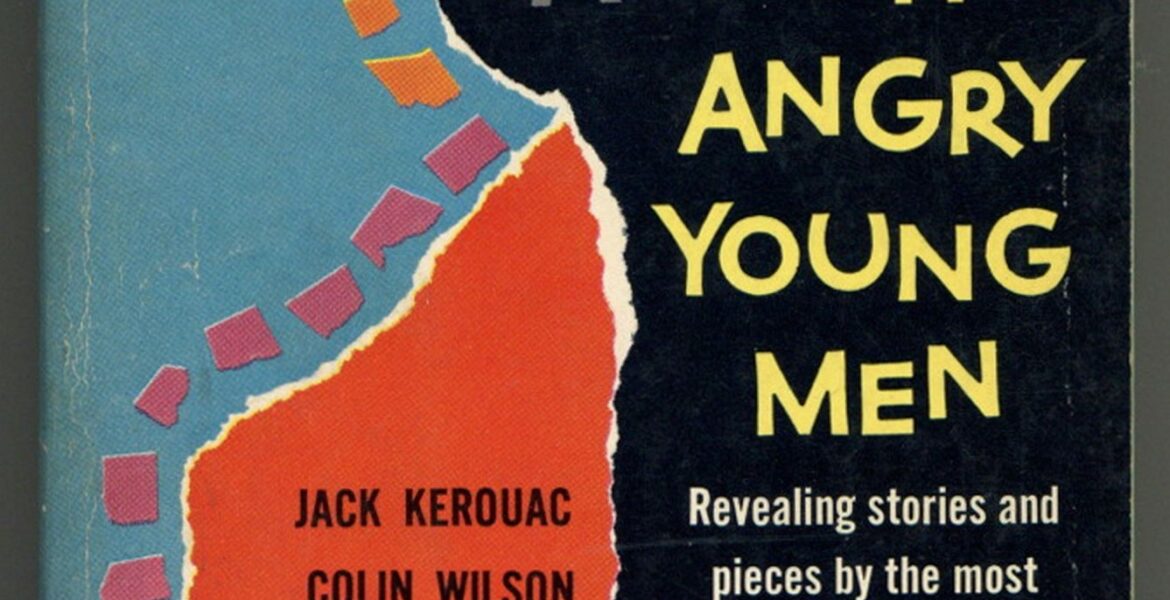
Colin Wilson’s The Outsider was published that same year. Wilson became famous when it was discovered that he slept rough on Hampstead Heath. His book explores the modern mind, with its alienation and creativity. “And it was“, said Philip Toynbee at the time, “An exhaustive, luminously intelligent study…a real contribution to our understanding of our deepest predicaments.”.
Colin immediately became the star of Faber’s literary parties, was modest and cheerful, while receiving the acclaim he believed he deserved.
The glory did not last. Much volte-face went on among the critics. Yet although Wilson’s celebrity faded almost immediately, Wilson continued to write. Because writing was what he did.
Many years after the fires of The Outsider had died away, I met Colin at a Cornish seaside, where he lived. He reminded me of a big bouncing uncle. We walked on that southern beach, he talking enthusiastically of his plans, writing a series of novels entitled Spider World published by Hampton Roads, U.S.A..
Spider World seems to mark out Colin as an unrecognised SF writer. Too late. The good man died in his Cornish home in 2013, and is allotted very few lines in the Oxford Companion to English Literature.
And what of John Osborne? Well, he died on Christmas Eve, 1994.
He wrote many plays which seem to grow increasingly bitter; also a volume of autobiography entitled Damn You, England. He was not afraid to speak out.
In the late fifties came his play entitled The Entertainer, featuring the ageing star actor Laurence Olivier as the entertainer. Complete with garishly painted features and outrageous clothes.
I went to see the play when it was put on in Oxford.
I sat in the gallery behind two old ladles, clearly academic, who were telling one another how they revered Olivier. “My dear, Larry has transformed the English stage. My dear, we shall never experience a Hamlet delivered with more reverence…”
“Oh, precisely that. Reverence. Hallowed precision….”
On came the play, the action. There was Olivier, done up to the nines, singing, “Thank god I’m normal, normal…”
And the two old ladies walked out.
Presumably the reaction Osborne would have liked.
John invited me to his place. It had once been fairly grand. Now it bore green patches. Do I remember that, or have I just thought of it? More clearly, I remember the lake, resembling a big muddy pond, close to the building. A tad cheerless.
Osborne was alone. The gorgeous Jill Bennett had quit. We went in, sat at an oak table and drank, and cursed the difficulties of life. I aired my grievance about never having been welcomed or even met by anyone, when returning from Burma and three years soldiering in the East.
He understood.
I drove home. The Volvo never hit a thing.
A short while later, Osborne sent me a five page letter, handwritten, speaking of his misery. His continuous misery. Misery, he said, which never went away.